Unknown's avatar

About Brian Yaeger

Author of beer books "Red, White, & Brew" & "Oregon Breweries" and, soon, "American Doughnut."

The Session #107: Are Breweries Your Friends?

sessionAs a precursor, to put this briefly, I’ve been a bad beer blogger. And when it comes to The Session, if I were Catholic, I’d type something like “Forgive me Father, it’s been 30 Sessions since my last participation.” (Click here if you care to see old contributions from my initial blog, Red, White, & Brew) My New Year’s resolution is to be better.

For the 107th ed. of The Session, Dan Conley of Community Beer Works in Buffalo NY asks, a bit self-servingly (wink-wink foreshadowing), “Are breweries your friends?

I say self-servingly because his blog is his brewery’s blog. And it worked. I really wanna try Community Beer Works beer now. And drink their beer and be a part of their community at least for the day. The topic, and hosting this Session, makes them seem, well, friendly. Conley expounds:

“To be in business nowadays you pretty much have to have a social media presence. This is especially true in the beer world, where some breweries have basically built themselves on their personality. And yet, at the end of the day, we’re selling you something.”

Conley continues, “Do you want your feeds clear of businesses, or do you like when a brewery engages with people? …As the person who does our social media…I struggle with this problem.”

My answer is: No.

Breweries are not our friends. Maybe I’m just speaking for myself and should say breweries are not my friends. But unlike Mitt Romney who famously said, “Corporations are people, my friend” (thanks in part to Citizens United), brewing companies are companies and therefore incapable of playing air hockey with me, taking me to a Portland Timbers game (except I suppose their sponsor Widmer Brothers Brewing could), or giving me a card that makes fun of my age for my next birthday. These are things friends do. Friends buy me beer. Breweries make the beer. And even then, what we love about craft beer is that brewers make the beer and, in the best of cases, we know their names and faces. And if you’re lucky, you’re friends with your local brewer(s).

Friendship is a relationship. Indeed, we have a relationship with the breweries that make the beer we choose to drink. And no doubt we have emotions surrounding breweries. In the case of local ones that we support, that emotion may be love. We are passionate about their beer. Given that most of us will never even have a beer from thousands of the 4,300 breweries that exist in the US alone, the emotion we feel for them may be indifference or lack of emotion. And in a few cases where folks feel they’ve been betrayed when a brewery sells out to ABI, a darker emotion courses through their bloodstream. Think about this: would a friend ever sell himself to the house of Bud and leave you high and dry (not that any of us would give up drinking beer altogether, mind you).

Heck, to Conley’s point, we “like” breweries on Facebook, and we delight when we see shiny new fermenters delivered just as we dote over actual friends’ newly delivered bouncing babies. But ultimately, no, breweries are not our friends. They are places we go with our friends. They are places that provide us beer to enjoy as part of our friend rituals. And to succeed, they need to have friendly service. But in the case of social media, I think it’s weird when they have actual personal profiles instead of business pages. I am on the fence about when I see a local brewery’s FB page “like” my pictures. But I’m still happy to tag them by checking in when I’m drinking at them with my friends.
Unsung Brewers

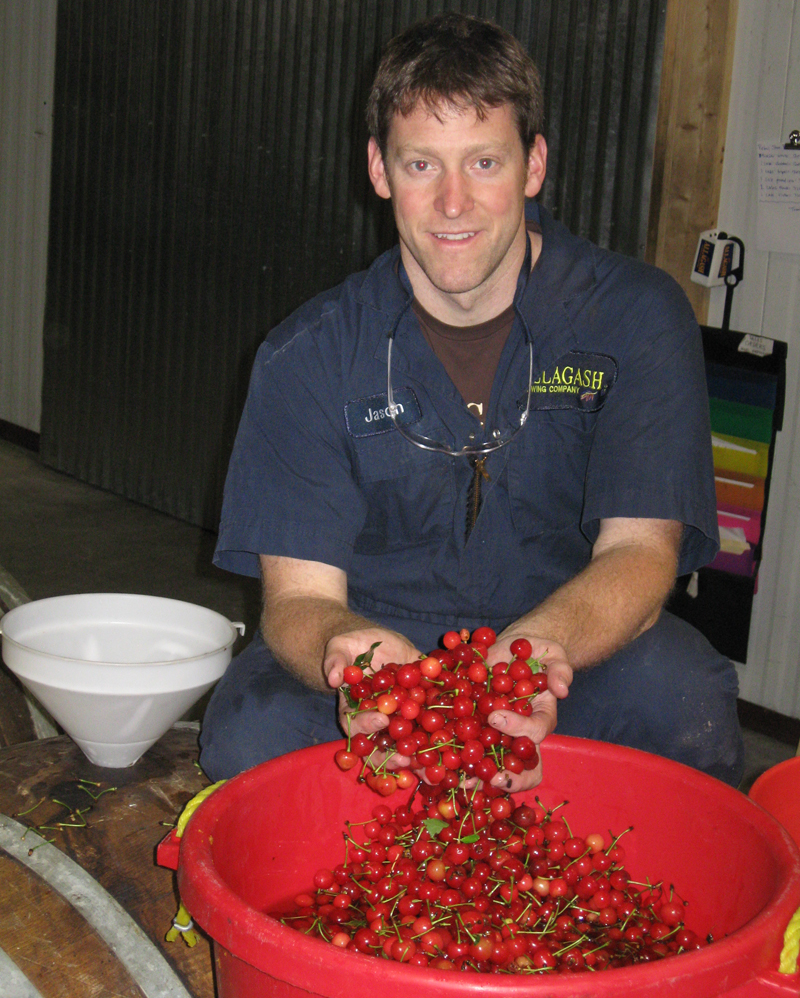
Beer magazines are really good at making sure that they cover more than just beer; they shine a spotlight on the men and women who actually make it. Y’know, the hands in the whole “hand-crafted” thing. I got to do a li’l spotlighting of my own on Allagash’s Jason Perkins (who makes some of my favorite sour cherry beers) in Portland, ME, Duck Rabbit’s Paul Philippon (who keeps the light shining on dark beers) in Farmville, NC, & Carton’s Pete Dickson (who, sorry, prefers to be out of the spotlight) in Atlantic Highlands


Beervana East: Columbia River Gorge

It’s terribly easy to write about Portland’s breweries and beer culture. Another easy sell on my part is Bend. Rounding out the top 3 is Hood River and the breweries along the Columbia River Gorge. 1) There’s a great handful of them. 2) Their beers are truly world class. 3) It’s insanely beautiful. 4) It’s an easy drive from Portland and whenever we get devoted beercationers at Inn Beervana, we always recommend the day trip.

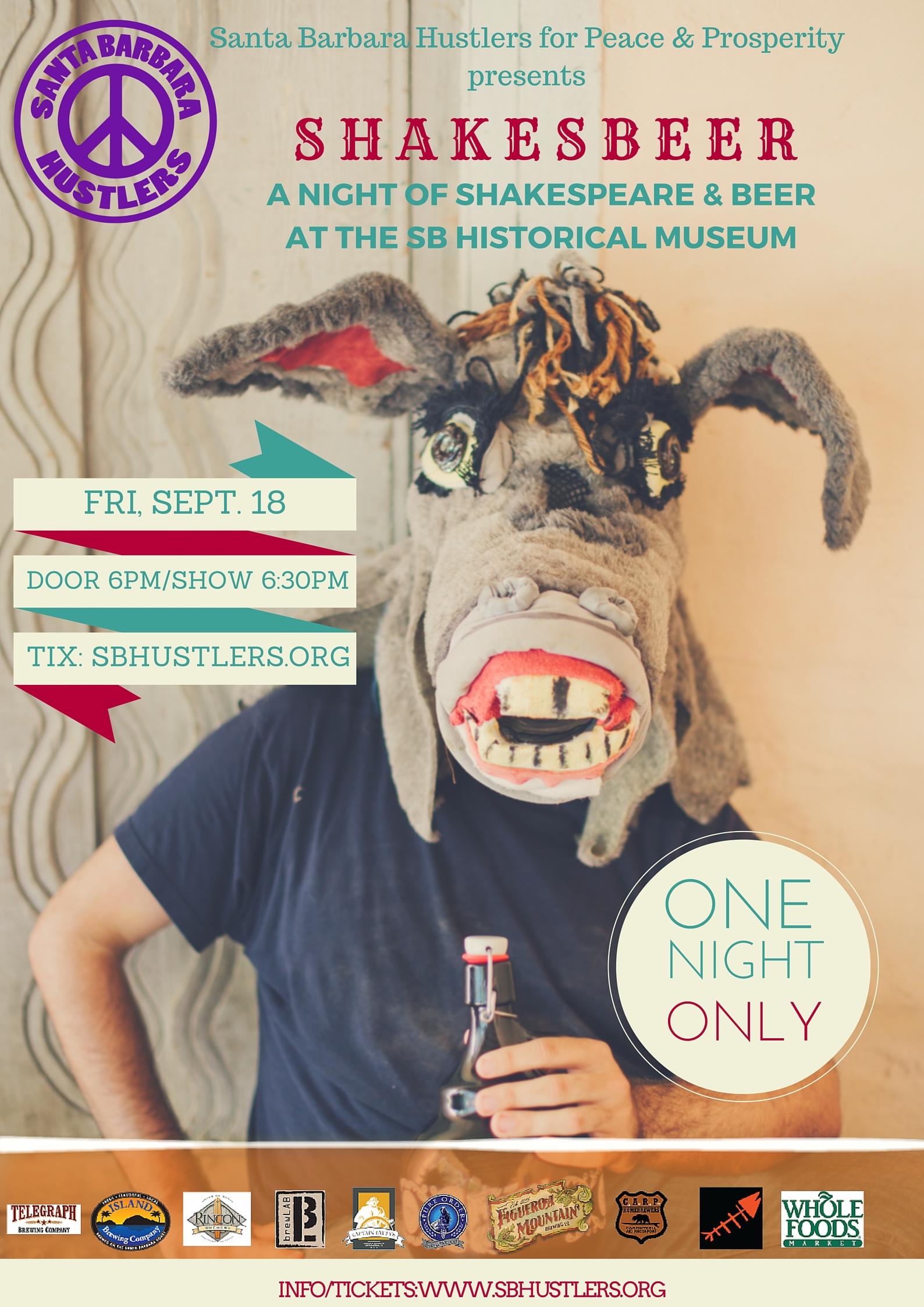
Shakes’Beer (How did Ashland not think of this first?)

ShakesSBeer Poster (1)
All the world’s a beerfest, and all the men and women merely hustlers.

Well, not all the men and women, just primarily four. Zachary Rosen is a Certified Cicerone—the beer industry equivalent of a Sommelier—and on September 18 he’s going to pair Santa Barbara area beers with the Bard of Avon. David Holmes is a theatrical director. Cecily Stewart is a professional ballet teacher. And Matt Turner is the co-founder of the Santa Barbara Hustlers for Peace and Prosperity, an approved project of the Share The Wealth Foundation that provides volunteering opportunities for those interested in becoming more engaged with their local community.
Shakes’Beer, a one-night event hosted at the Santa Barbara Historical Museum, seems more befitting of Ashland, home of nearly-yearlong Oregon Shakespeare Festival as well as breweries Caldera, Standing Stone, and Swing Tree.

The fundraiser is billed as “Shakespeare in the Park meets a beer festival pairing beers with different Shakespearean characters and themes.” With Holmes directing scenes and monologues and Stewart directing “interpretive ballet and an Elizabethan dance session,” Rosen directs the theatre-in-the-round of beers. He styles himself as a specialist in abstract beer pairing events, often combining beer with music and art. He got eight local breweries to design ten unique beers for the event, each one reflecting a different character. For example, Romeo will be liquidly portrayed by brewLAB’s Red Purl Saison (brewed with Perle hops, wormwood, orange peel, and licorice root) opposite Ricon Brewery’s Juliet played by a comely Belgian IPA adorned with hibiscus, vanilla, and orange peel. A beer like Telegraph Brewing’s ode to (Gingered) Julia from Two Gentlemen of Verona and (Bonny) Kate from Taming of the Shrew would certainly break a leg seeing as it’s a Witbier with fresh ginger, pineapple, and Scotch Bonnet peppers.

Even if there are other “Shakesbeer” events such as the Shakesbeer Fest in Stratford upon Connecticut benefitting the American Shakespeare Theatre and another held at The Discovery Center of Murfeesboro, TN, if the SB Hustlers really want to make the world a better place through altruism, they can volunteer to bring their Shakes’Beer at least 650 miles north up to Oregon. I nominate StormBreaker to brew a Trinculo from The Tempest and Baerlic to make Iambic Lambic.

Hood River’s Cider Trail

Cider makers in Hood River on the Columbia Gorge Cider Trail

Gorge-grown apples. Photo Brian Yaeger

Along the south bank of the Columbia River Gorge—generally perceived as a kiteboarder’s, hiker’s and wine-lover’s dream come true—we are witnessing a new farm-fresh industry take root. Whether you’re gluten-free, an adventurous beer drinker looking for the “Next Big Thing” or simply a devotee of full-flavored liquid artistry, the Hood River Valley’s newest craze is in the pomme of your hand. Following the late summer harvest and accounting for fermentation times, count on cider season in early autumn.

As an added bonus, the Gorge Cider Society has created a handy Columbia Gorge Cider Route site and map to this always-expanding exciting destination.

Lagunitas, Heineken, and post-craft beer

urlToday’s bombshell news via Beerpulse, that Lagunitas Brewing founder Tony Magee sold half his baby to the Dutch beer conglomerate Heineken rings more like one of Bang Snaps (aka poppers or throw-downs). A bit startling since it landed at our feet, but it’s not like Tony didn’t warn us that he was throwing one our way for the last few weeks (via his Tumblr blog)!

My 2¢ on the matter: Good for you, Tony. Now that you’ve sold 50% of your brewing company, welcome to being semi-retired.

As Mr. Magee put it himself in today’s post that is required reading before anyone says one flipping word about this matter, he’s “55 years old going on 80.” I have a hard enough time going to the market to pick up a roll of paper towels and I’m 14 years younger.

Lagunitas is America’s sixth largest “craft” brewery. It’s reportedly valued at…are you sitting down?… One Billion Dollars. Last year they brewed some 600,000 barrels. Four years ago before the Craft Brewers Conference, Tony told me that the five largest craft brewers rake in 45% of the craft segment of the beer industry. That was before Yuengling’s status was reclassified by the BA’s board members as being “craft” despite the fact that they’ve always upheld the BA’s three pillars of craftdom: being small (only in comparison to the Big Two of ABI and MillerCoors), traditional (hello! America’s Oldest Brewery), and independent (it remains in the hands of the founder’s sixth and seventh generation descendants).

Soon, Lagunitas will have a third brewing facility online in SoCal after the original in NorCal and a second in his native Chicago. And soon, they will be brewing well over a million barrels a year, which is still well below the BA’s definition of small which presently stands at 6 million bbls. However, their definition of independent is no more than 25% ownership by a major brewing concern. Heinie is a major brewing concern.

Ostensibly, this means that the next time the Brewers Association announces craft beer’s market share, the numbers will reflect lower than anticipated numbers. It will be a setback for the goal of 20% market share by 2020 because they just lost the projected million barrels that even the thousand new brewpubs and nanobreweries combined can’t account for. But don’t you dare blame Tony for pursuing the American dream. Love him or hate him–and there are plenty of folks in each camp–dude’s worked his ass off. He deserves this success. And in his astoundingly articulate, erudite, and strategic manner, the Nietzsche-esque stoner “madman” from Petaluma has neither “come too soon” nor too late. His ship arrived at the exact right time. The industry will keep sailing with and without Lagunitas, a subsidiary of Heineken International, as this just further demonstrates that we are drinking in a post-craft beer world.

Feel free to mumble in the comments below.

Beervana’s Brunchvana

If the editors at Draft know one thing, it’s that a late night of drinking great beer calls for a late morning of eating a worthy breakfast. So I pitched my hometown for their Best Breakfasts series. I was limited to just 3 spots + a late night bites hotspot. I would’ve had an easier time writing this if I could’ve picked my favorite 13 places. Alas.

Cucumber beers. Yep, that’s a thing.

Move over hops?

Trinity Brewing’s Elektrick Cukumbuhh, which won a bronze medal at the 2014 Great American Beer Festival, is brewed with 700 lbs. of organic, hand-peeled cucumbers

Photo courtesy Trinity Brewing

Yes, there are oddball adjuncts appearing in beers today—Stilton cheese culture and beard cultures, civet poop coffee and elephant poop coffee, bull testicles and dung-smoked whale testicles—but as much as cucumbers seem weird to throw in a beer, once shock wears off, deft and delicious beer remains.

I’m not sure which is more astonishing: that there are several beers made with this vegetable or the fact that cucumbers aren’t veggies at all.

Documenting Portland’s beer culture

Two weeks ago McMenamins Mission Theater hosted a screening of It All Starts with Beer, a Dutch-made film about the beer cultural exchange taking place between Dutch and American brewers—primarily ones from Utrecht not far from Amsterdam and here in Portland as part of the Portland Utrecht Network (PUN intended). The film and the screening were made possible, in large part, to Dutch brewer and artisan Rick Nelson from Oedipus Brewing and Portland-based PUN president Greg Raisman. Plus, of course, none of it would’ve been made possible without Cascade Brewing founder Art Larrance and the Oregon Brewers Fest that he co-founded 28 years ago.

I was invited to speak on the panel following the beautifully-shot documentary simply because I had the good fortune to be at the right place and the right time, that being Holland in 2014 for a front row seat as their craft beer culture took a giant leap forward to the point where industry members call their scene “20 years behind Portland’s.” (For Larrance’s part, he tried to persuade me to move to Utrecht, not Amsterdam, because of how cool their brewing scene is, which nowadays benefits from the proximity and relationships with Amsterdam’s community.) Keep in mind there were already almost 20 breweries in these parts back then.

But this Saturday, I’m jumping from the panel into the doc itself. I’ll have a back row seat in the car, cars, or van that will transport John Lovegrove and filmmaker Thom Roholt to 77 breweries throughout Portland Metro. Portland? Why John? Why 77?

Lovegrove is the underground local legend who quaffed a half pint at all 34 breweries in Portland in 2009. Yes, he blew hopped chunks by the end! Two years later he surpassed his own stunt and found himself at 50 in a single day (and spewed at the end again). Fifty, today, seems more doable (not recommended, just doable) considering the clusters that have sprung up in areas like Buckman and Boise and the Pearl. Heck, Oregon City has three operating breweries today (and soon five) that didn’t exist the last time Lovegrove and Roholt undertook this most epic of pub crawls. As for the number they’re attempting in four days and the reason I’m along for the ride, vowing to drink just 1-oz of a house-brewed beer at each stop: I’ll simply be LiveTweeting the ordeal. RIP City!

Speaking of financing, Roholt’s documentary, which is about the who, how, and why PDX became Brew City in the first place and not about the foolhardy pub crawl, is accepting pledges on the website, PDXBrewCity.com. The IndieGoGo crowdsourcing campaign is raising funding for the film itself. The top tier donation includes a mini version of the crawl, to three area breweries, where patrons will undoubtedly get to enjoy more than a total of three ounces of the stuff that makes Beervana “Brewtopia,” I mean that makes Brewtopia “PDX Brew City.”

As for the 77 part. The film will be tied together with a world record attempt at visiting 77 breweries in one day because A) we can and B) the 1977 NBA Champoinship Trail Blazers emblazoned this city with the Spirit of ’77. #Spiritof77Breweries!

Lastly, why do I even get to tagalong? Because I vociferously doubted their ability to complete the 77 brewery challenge but upon realize I couldn’t talk John out of it, I talked myself into it. It’ll be a great way to hit a handful of the area’s newest breweries that weren’t open in time for Oregon Breweries and that I haven’t even been to yet such as Back Pedal, Red Ox (Tigard), Oregon City Brewing, nearly all of the ones in Vantucky, and, the newest among ’em, adjacent to Back Pedal: Splash Bar!

Hope to survive to blog about the experience.

Barley, Hops, Water and…Yogurt?

Edit: This story was awarded 1st place in the “Short Form” category at the 2016 North American Guild of Beer Writers (NAGBW) awards.

From BeerAdvocate Magazine #103:

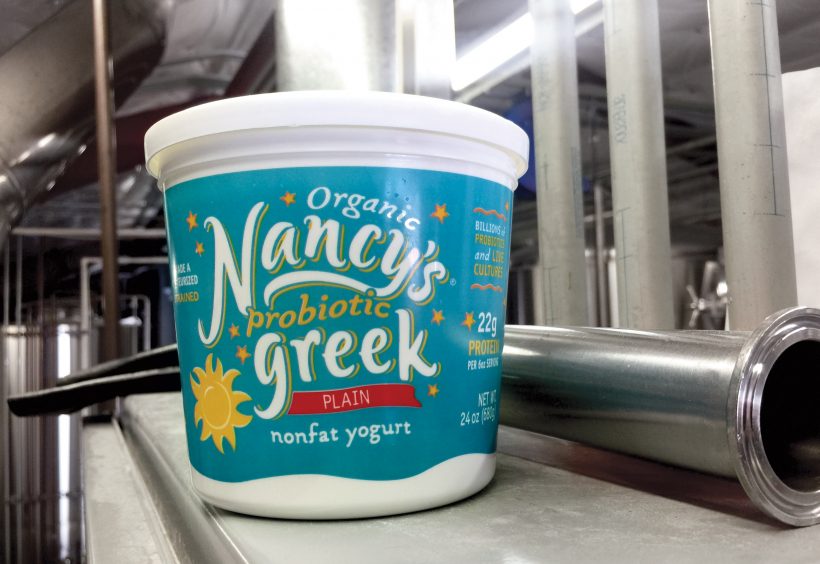
No one raises their eyebrows when black currants are used in a beer these days, but yogurt? To create the desired tartness and acidity in The Commons Brewery’s Biere Royale—a riff on the cassis-based Kir Royale cocktail—head brewer Sean Burke pitched tubs of the stuff. Specifically Nancy’s brand Greek yogurt. Burke is from Eugene, Ore., not far from the creamery’s location. Plus, it was in his fridge. Remarkably, the creation of that beer for the 2013 Portland Fruit Beer Festival is one the first uses of Lactobacillus found in unpasteurized yogurt to acidify beer. Instead of extensive aging in barrels inoculated with acid-producing bacteria, Burke went with a probiotic-rich dairy product.

“We knew we wanted to have a high amount of acidity,” said Burke at the time. “We took Nancy’s Greek yogurt and created a starter and soured in the kettle. Nancy’s has multiple strains of Lactobacillus… We mashed into the mash tun, lautered into the kettle, then soured the collected wort.”