

 Before I even jump into the 129th entry in the decade-long running Beer Blogging Session, I’m happy to announce that Yours Truly will be hosting the 130th rendition of The Session! I won’t hijack my own post and spill the beans what the topic will be (stay tuned for my announcement next week), so now I can resume tackling this month’s subject as conjured up by Eoghan Walsh and hosted at his Brussels Beer City is: Missing Local Beer Styles.
In 2017 it might seem odd to think that there are beer styles missing from our local markets. We seem to be living in an era of almost ubiquitous choice – where almost every style of beer is available to us either in bars or online, and where new styles quickly break out from their local markets to be brewed by craft or independent breweries around the world. Often though, this choice feels like one between an IPA, a session IPA, a double IPA, a NEIPA, a black IPA (although, really?), West Coast IPA, fruited IPA, etc.
You get the picture.
Outside of large metropolitan areas, areas with a large craft beer culture, or regions without recourse to online shopping the spread of different or new styles can remain limited. …(As such) what beer style would you like to see being brewed in your local market that is not yet being brewed?


Posed this question one month ago, I’d have had a hard time delivering an answer. The only beer style that it seems my local or most of America’s craft breweries completely ignore of late is the English IPA (*rimshot*). But there, on the floor of this year’s GABF, Austin’s Live Oak Brewing was sampling attendees with a smoky motif: a 4.4% Heller Rauchbier, a whopper, jr. of a 3% Grodzinskie, and—voila—what I recall was my first taste of a Lichtenhainer. If you caught yourself reaction with “a what-en-heinie?!” you’re excused for never having heard of it before. In a few words, it’s a smoked German sour ale. In more than a few words, here’s Live Oak’s description from their webpage outlining their brilliant line of six rauchbiers:
Lichtenhaier is a German beer style that vanished in the 1980s. Similar in strength and tartness to Berliner Weisse, this beer adds the intriguing aroma of smoked malt. Fermentation with yeast and Lactobacillus creates an acidic profile. The low bitterness and high level of carbonation allows for full enjoyment of the subtle lemony acid and smoke flavors. Please enjoy this historical re-recreation. OG 9ºP, ABV 3.2%, IBU: 6
Now, I love me some thick, bone-toasting Aecht Schlenkerla Doppelbock at 8% or their 6.4% Hellerbock, each robust with bacony goodness that leaves me reeking as if I’ve stumbled into a bonfire, this Lichtenhainer was still big on smoke, medium on tartness, making it huge on flavor yet a featherweight in both body and alcohol. In other words: a perfect beer! And yet, the only time I’d ever come across the style name was general passages lumping German sour ales together such as goses and gratzers. As was to be expected, I found an entry about them on Shut Up About Barclay Perkins (and much of the good stuff is Ron Pattinson (mis-credited as Martyn Cornell initially because of a spirited sandwich feud taking place on Jay Brooks’s Facebook wall that gave me Martyn-on-the-brain) quoting vintage publications, beginning with this quote from Dr. Max Delbrück’s Brauerei-Lexicon of 1910:
“Lichtenhainer is made from smoked barley malt alone, it acquires its sourish taste not during primary fermentation, as does Berliner Weisse, but only through a later developing infection with lactic acid bacteria. . . .”
As for its appellation, Pattinson notes where Lichtenhainer hails or hailed from:
“Real” Lichtenahainer came from the villages of Wöllnitz, Ziegenhain, Ammerbach, Winzerla and, of course, Lichtenhain.
One thing I personally find interesting is that Lichtenhein, a village in Saxony, is exactly 330 kilometers southeast of Goslar where un-smoked goses emanated and 330 km northeast of Bamberg where non-soured rauchbiers have never gone extinct.
*Update* It only took Ron a few hours to not only see my post but make a few amendments. Not quite corrections as I don’t believe I got anything wrong, per se, about Lichtenhainer’s disapperance, but I’m sure Pattinson would like everyone to be aware that “Berliner Weisse was also smoked until the 1840’s. Grätzer/Grodziskie was never a sour style” and furthermore that “Lichtenhainer only disappeared for a few years.” I will say that, if it only disappeared for a few years, even people who were declared dead and then get their pulse back seconds or minutes later get to claim they were legally dead.
So there we have it. I don’t have much more to extrapolate after that, but I’m glad that I had an answer for this month’s Session and I’m glad the Session gave me an outlet to praise effusively Live Oak’s rendition of a Lichtenhainer as well as add another global destination on my bucketlist to hunt down an authentic iteration. Then again, if more breweries (that I have access to far from Texas) start giving a lick, I would only have to make the journey to my local watering hole.
 So the 127th topic for The Session is, if you’ll pardon the crude analogies, akin to asking Cheech & Chong about what makes a great head shop or the late Hugh Hefner which campuses to scour for Playmates. Let’s let Jack Perdue over at Deep Beer set it up:
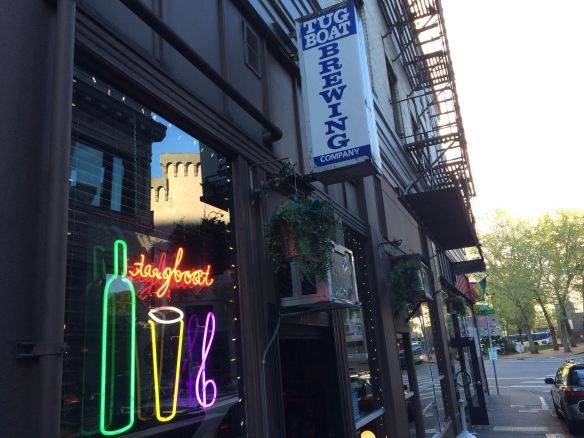
 Admittedly, it’s not always easy thinking up themes for my Beer Traveler column in All About Beer. But even at the beginning of the year I knew that with the Totality streaking across the entire USA, there’d be enough breweries submerged in darkness to squeeze a handful into a travel story. Featured herein are breweries from Pacific City, OR where the Path of Totality first hits land, through Salem (also in OR), Lincoln, NE, St. Louis, Paducah, KY (probably the first time Paducah has appeared in any beer-related travel story), Nashville, and Greenville, SC (from the comments, boy are folks in nearby Columbus and Charleston, SC upset about their omission through my lack of ability to include every single brewery that’s going to experience mid-morning nighttime.) Anyway,

 800 & counting.
  “Inn Beervana is a fantastic option for a stay in Portland; the location is excellent, the place is comfortable and cozy, and hosts Brian and Kimberley are really engaging and lovely (and if you are coming to explore the craft beer scene in the Pacific NW, you’ll find so many of your questions answered by all the great literature and conversations from Brian — which honestly saves a ton of time given the vastness of the options in town and the surrounding areas!)”
 It’s kinda funny that Oregonians get their feathers ruffled by Californians who move here when I find that the majority of transplants are from other states (predominantly the Midwest). Nobody has control over where they have to be from. But as adults, we get to choose where we want to be. As an L.A. native, the migratory nature of the population was easy to understand: who wouldn’t want to leave the grey or flat or provincial places they’re from and live somewhere warm and where you can find your people. Of course, I grew to hate how long it takes to drive to where your people are. I still love my family and all my people there, I just can’t stand to exist surrounded by it. I think it’s a safe statement to make that I’m pretty chill. But only Wifey know the extent of my road rage. That’s one of the factors that excluded a move back to the Bay. Plus: tech bro douchebags amiright?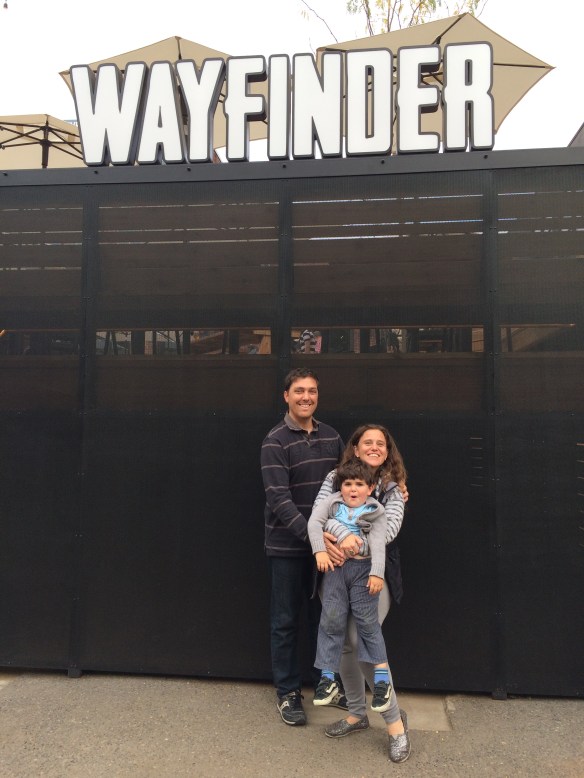
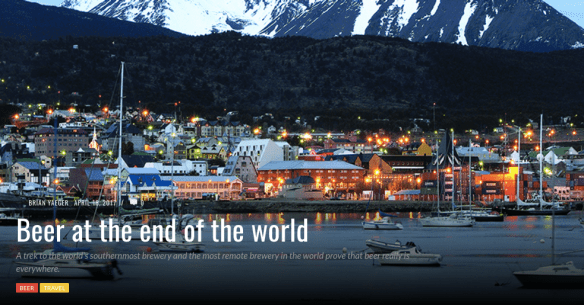 Edit: This story was awarded 3rd place in the Travel Writing category at the 2017 North American Guild of Beer Writers (NAGBW) awards.
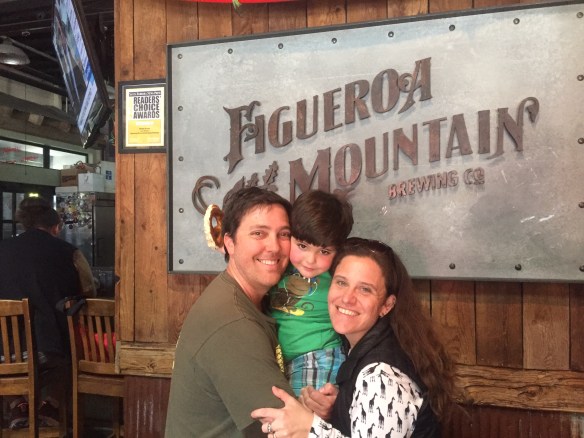
 I didn’t necessarily pitch a story on the hardware store slash beer bar that started it all (y’know, the multitap hardware store craze!) to BeerAdvocate’s editor Ben, I just somehow mentioned it and he asked if I’d like to write it up for the mag. As if I ever need an excuse to head out to Cannon Beach on the Oregon coast and drink beer. There are now three breweries in the tiny town, but there’s only one spot you can get a cold pint and a toilet flapper. Behold,
  Brian Yaeger: Beer Writer