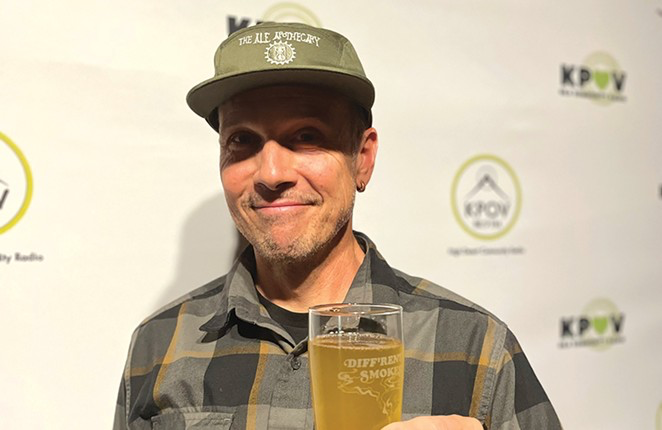
It’s almost a good thing I neglected to post this story about smokey, Gotland, Sweden-style farmhouse ale, aka Gotlandsdricke, when it was published in Bend Source Weekly this past year. Why? Because it gives me a chance to share it now, now that it was awarded the 3rd Best Beer Review by the North American Guild of Beer Writers. It’s a real thing!
I neither fell in love with this beer style–perhaps most closely resembling a Polish-style Grodziskie or Lichtenhainer, but those also require high levels of beergeekdom given how obscure they are–neither in Sweden nor here in Bend, Oregon, but in Boston, Mass! That’s the backgrounder on how I played a roll in getting a stab at the style to be made here in Bend…
I was asked to author my 10 favorite beers of the year for Bend Source Weekly. My first draft clocked in at 1,500 words because I gave a fair amount of thought (and background info) on each one. But my word count is a firm 700. After a couple rounds of edits, I got it down to 1,050 words, meaning I’d shed 350 but still had 350 to go. While those first 350 are now lost to the ether, I’m re/pre-printing the list here at the mid-way point just so folx could see I didn’t just write 60 words per phenomenal beer.
By my best guesstimate, each of Central Oregon’s 27 breweries released, on average, at least dozen beers in the past year, meaning we had no fewer than 350 local beers to choose from. I confess, nay, lament, I did not try them all. (That said, drinking a new beer each day in 2023 is quite a tempting challenge.) So take this list of my 10 favorite Central Oregon-brewed beers with a grain of salt (that’d be right at home in Spider City’s Kaffir Lime Sea Salt Gose or Cascade Lakes’ Salted Caramel Porter)
Funky Fauna Artisan Ales, Thought I’d Something More to Say (Wild Saison). While saison is possibly the world’s most elegant beer style—it’s simultaneously rustic and cosmopolitan—the big tent style is woefully overlooked and under-represented among Central Oregon brewers. That was, until this Sisters-based brewery went all-in on them when it launched a year ago. Funky Fauna has released nearly 50 versions of “wild saisons,” meaning they’re fermented with a native cultivated and propagated yeast strain. Some of the beers feature colorful fruit, one even featured butterfly pea flowers that turned it a gorgeous shade of purple, but there’s no beating the delicate complexity of an oaked saison that conjures notes of wild grasses, tangy herbs, and the terroir of locally-grown and malted grains embodied in a beer like …More to Say. It’s only 4.5 percent alcohol yet packs a tremendous amount of flavor that, like many a saison, may be the ideal beverage to pair with gourmet or quotidian meals alike.
Deschutes Brewery, Experimental 1320 (Fresh Hop IPA). Late summer hop harvest is arguably the best season for beer drinking. It’s not that every fresh hop beer is delicious, but therein lies the beauty and wonderment because they are difficult to hit the bull’s eye but when you do, they’re phantasmagorical. When Source Weekly contributors blind taste tested a slew from this year’s crop, Deschutes Experimental 1320 struck my taste buds as smacking of fresh pineapple veering into POG (pineapple orange guava) territory with that tell-tale freshie finish like chewing on flower stems (in lieu/luau of a tiny parasol.
Spider City Brewing, Spicy Goat (Serrano-Pineapple IPA). Spider City’s line of hazy IPAs in its “deer” family and clear, West Coast IPAs in its “goat” family are solid hop-delivery vehicles. But Spicy Goat is also a capsicum delivery vehicle courtesy of serrano peppers. It’s spicy but not spiiiicy. To temper the heat, a sweet, juicy wave of piña, which brings out the tropical fruit note from the hops, conveys enough dank and juicy vibes as if swept up in the Pineapple Express current. Chili beers may be a tough sell but IPAs aren’t so this beer was a welcome way to bring the heat to a nice, cold beer.
Bevel Brewing, Black Ace (Cascadian Dark Ale). Every time I sit around thinking how much I miss Cascadian Dark Ales, locally dubbed CDA and colloquially dubbed Black IPA, I perk myself up with a trip to Bevel. Perk is an apt verb considering CDAs drink like an stout-IPA combo proffering espresso notes from dark roasted malts and piny notes from PNW hops. As Bend’s rare yet typically year-round CDA, Black Ace (7.6 percent) is par for the course.
Cascade Lakes Brewing, Resurgence (Gin-barrel-aged IPA). Gin barrels are difficult to come by for brewers (because most gins never see the inside of a barrel). Courtesy of Redmond’s gin-centric Gompers Distillery that produces an Old Tom (oaked gin), Cascade Lakes obtained an empty cask and, instead of filling it with a more expected sour ale or imperial stout, ameliorated Revival IPA by maturing it in an Old Tom barrel for seven months that playfully married the gin’s botanical top notes with Centennial and Idaho 7 hops’ resinous flavors for a fascinating result that would be equally welcomed by hop heads and G&T fanatics.
10 Barrel Brewing, Gindulgence (sour ale). At brewery behemoth 10 Barrel, the niche imprint TinyHaus serves as a creative output for brewmaster Tonya Cornett. This sour beer was imbued with peach, chamomile tea, and—most critically—gin botanicals (primarily juniper berries) to create a refreshingly complex, slightly sour ale that scratches the itch of a fruit beer, a hard kombucha, and a gin gimlet.
Van Henion Brewing, Schwarzbier (black lager). Before even turning one, Van Henion illustrates what a wide world of flavors—and colors—Germanic lagers encapsulate. Schwarzbier simply translates to black beer and this sub-five-percenter expertly pulls off boasting a light body while bursting with dry, astringent, dark roasted malts that lend burnt toast notes atop clean, noble hops. It’s a rare sipper that works well in brisk winter or on warm summer days.
Porter Brewing, Infamous (Extra Special Bitter). The “bitter” family of ales have become endangered, but even its strongest member, ESB, is far less bitter than IPA. At 5.8 percent ABV and 39 IBU (International Bitterness Units), Porter’s Infamous ESB is a delectable platform for English malts and hops. Its malt sweetness and floral bitterness packs toffee bottom notes, woody, floral top notes, and comes wrapped in a warming—but not “warm” cask-conditioned ale.
Deschutes Brewery, Kanpai Crispy (Rice Lager). Forget the olden days when craft breweries shaded macros for using corn or rice in their lager grist; these adjuncts have gained traction among most breweries and perhaps never showcased better than in Japanese-style rice lagers. This 4.8 beer is dry, refreshing, and crushable AF. I dare say it’s the best beer for floating (and great for aprés ski or, if you’re one of those who can’t wait til you’re off the lift, during).
Crux Fermentation Project, Yaamco (spiced winter ale). While Crux’s Bochi Bochi vied for my vote as best rice lager, the fermentation project’s 6.7 percent Yaamco—it’s a yam beer brewed in a former Aamco station—ran away with my vote for best winter warmer. Picture a malty brown ale like Crux’s Dark Snap, then augment it with roasted yams (over a pound per barrel), orange peel, and the holy trinity of baking spices: cinnamon, ginger, and clove. Suck it, egg nog, winter has a new snowy sipper.
I didn’t fall in love slowly. It happened all at once. In the middle of the California Brewers Association’s annual festival, where WCIPAs reign supreme, I found about 6 or 7 “Japanese” lagers. AKA rice lagers. That was circa 2019 and I haven’t fallen out of love since. Here’s another love letter to the style, focusing primarily on Portland Metro iterations of the crisp, clean, dry lagers.
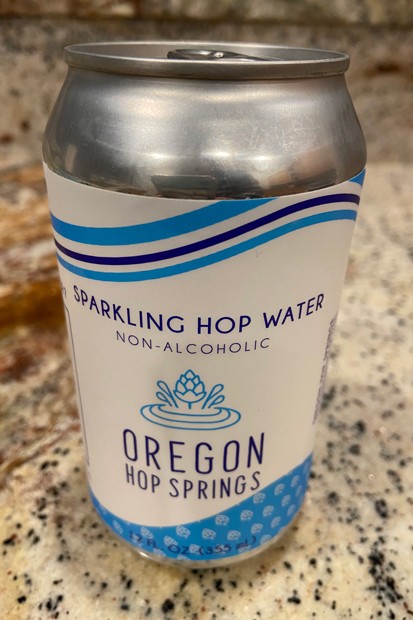
The concept of “Dry January” took off a decade ago and finally landed on my radar a few years ago, but as a beer writer, what use have I of non=alcoholic beverages to write about? It turns out, when these soft drinks are hopped, I’ve got at least two occasions to cover ’em. The first was in Drynuary 2020 and then again Drynuary 2022 with a local (to Bend) twist. Here are some great hoppy N/A beverages for a thirsty nation via The Takeout and here’s some available to Central Oregonians via Bend Source Weekly.
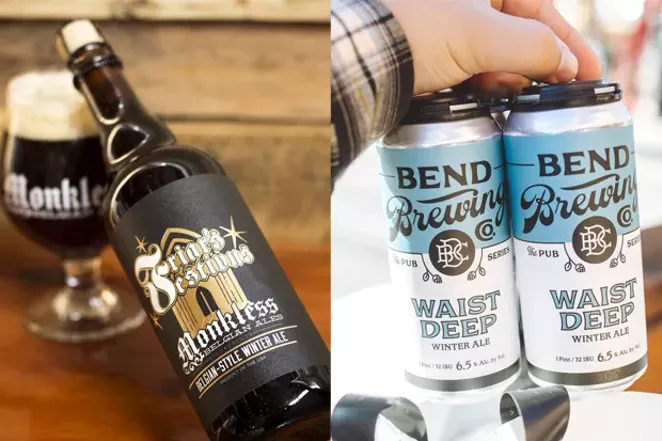
It seems every month offers something new I’m completely pumped about getting to experience for the “first” time as a full-time Bend resident. Certainly, even in Portland, Bend breweries are well represented so it’s not like these are all new to me, but whereas Portland winters are usually dreary, Bend winter is cheery. There were snowmen on every block until the snow turned back to rain these last couple of days. But I won’t let that rain on my parade. Or my batch of favorite “winter warmers.” I tried to limit this round-up to just five, but I sorta snuck in a pair from five different local breweries. Sue me.
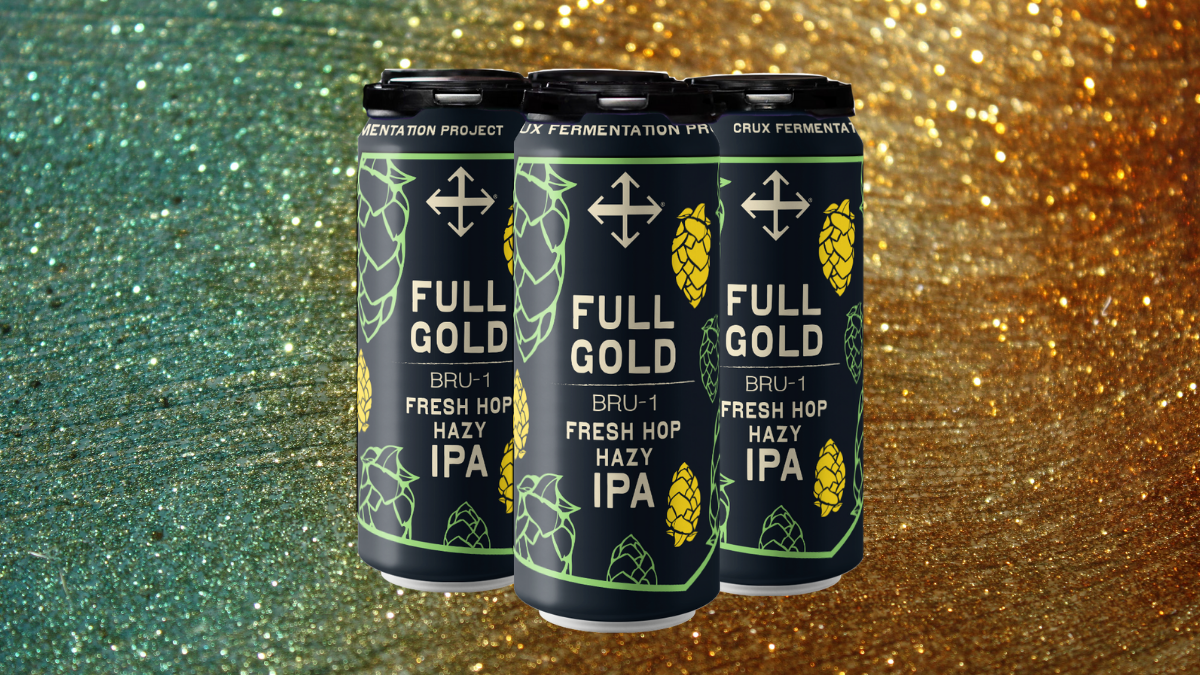
Apologies for the bizarre-titled post but, like the contents of the subject matter, I’ma keep it short. I’d penned this uncharacteristically laconic review of Crux Fermentation Project’s “Full Gold Fresh Hop Hazy IPA” for SIP Magazine. It only cemented my love affair with BRU-1 hops. And fresh hop beers in general. And nabbing a silver at the 2022 NAGBYs in the process.
I’m a big fan of the new direction in wine-beer hybrids, in one tiny circle called oenobeers. So while writing a few stories about these beers co-fermented with wine grapes, a few examples from New Braunfels, TX-based New Braunfels Brewing were shipped my way. One beer, Very Seldom Naughty, employed Chenin Blanc and Viognier pomace and was aged in white wine barrels yet still was stashed in the cellar for later enjoyment.
Now IS later. And just as no wine before its time, it seems two years is the right amount of time to lay down this release. When I open these, I always offer Wifey a taste (and her own glass if she likes it). And since she tends to not pull her weight when the bottle contains a big, bourbony behemoth of a beer, I wish that tart, fruity mixed-culture beers like this would roll into her wheelhouse, but she deemed it “too funky.” Which is to show how subjective this stuff is because I found this beer quite approachable. In the vein of a sour witbier or grapey gose, it had moderate tannins and effervescence and generally tasted like something both champagne and lambic fans would both enjoy.
If you’ve never had anything from this Central Texas brewery, this is as good a place as any to start exploring. Oh sure, they’ve got some sour Pickle Juice beers, but if in a contest of funky vs approachability, my money’s on Very Seldom Naughty over the brine.
I’m shit with names. Faces, too. But I’m usually elephant-like when it comes to beers. Not just if I’ve had it, but how much I liked it, where I got it, if my son was with me or not. But this bottle? I have no freaking idea how it came to exist in my beer fridge! But I know this: I’m glad it did.
By the time I’d reached for a fourth bottle out of the beer fridge, I needed something diametrically counter to the big-booze, big-barrel, big-malt bombs of the eves before. For starters, it’s a cider. For secondly, it was bottled in 2016, not nearly a decade old. For thirdsies, instead of something syrupy sweet like many modern ciders are, it was billed by its maker, Reverend Nat’s, I asked of its contents, won’t you take me to a different place than nights past? Won’t you take me to… Fuzzytown?
The funky Fuzzytown is an imperial sour cider aged in red wine barrels with kiwi and Mosaic hops. If that sounds like a mouthful, it’s twice as true literally as it is figuratively/nominally. The serious acid lets you know from the get-go that this is no SOS cider. It’s exceptionally bright, and the combo of the sourness and the carbonation presents like Pop Rocks merged with Warheads. But this is no kiddy cider; it’s like a complex cocktail from outer space. Those 122 pounds of fresh kiwi fruit ride high, followed by those hops that hit like 122 pounds of fresh mango.
As much as I lean toward classic cider styles of older countries (and autonomous regions in the Fresh-Spanish Pyrenees), Rev Nat’s ciders are always an exhilarating ride straddling the future and the now of cidermaking. They never do what I feel most flavored ciders do which is hide from the fact that it’s supposed to still taste like apples. And this being made with Newtown Pippins, a favorite of the supermarket eater varieties that still serves cidermakers well, this one made me appreciative of the forgetful impulse buy I made before moving out of Portland.
The third beer is the very definition of a cellar-dweller. I’ve never once bought an entire case of a single beer. Except for one time I did and dropped, if I recall, $300 on it. No less.
Why’d I buy a case of Hair of the Dog‘s Cherry Adam From the Wood (Ftw)? It was a favor to a guy I very much doubt is reading this, but a guy who I felt I owed a beer-debt to when he’d provided a memorable (and simultaneously immemorable) experience in Kentucky a few years earlier). By that point in late 2011, I’d been living in Portland, OR for a couple years, attended my first FredFest, and fell in love with brewmaster Alan Sprints’ FTW series. These weren’t sour beers and they weren’t using every obscure fruit under the sun. They were the same strong ales HotD had become known for–beers with big personalities named for (often-four-letter)-named people who’d had a big impact on Sprints. Fred. Otto. Not that the pale ale named for his gramma Ruth was a Belgian Strong Ale, but as someone who had a Grandma Ruth myself, I could relate to his naming convention.
So I went to the dock sale early one morning, I don’t recall much of a line having formed, and dutifully bought the case for my friend. And a year later, when that case was still fully in tact in a dark, cool, crawlspace beneath our basement stairs, I asked the Kentuckian about his plans to procure his favor, which I wasn’t even going to charge interest or the increased market value since this one-of-100 case had developed quite a cult following. CAFTW became the ISO-acronym around beertrader sites.
That email thread was quite short. And fruitless. And I began treating myself to the occasional 12-ounce bottle of CAFTW.
Soon, I started popping ’em at bottle-shares. It made frequent appearance at my themed cellar-clearings, like all cherry beers. (Note: I did start an entire beer festival devoted specifically to barrel-aged sour cherry beers called Kriekfest, so you can believe I’ve gottta lotta cherry beers in my stash.)
But 24 bottles is a lot. And I still had 5 left at the start of this isolation. Not that ISO any more lation at this moment!
When I popped the top, a semi-fart of autolysed air leaked out. The liquid is less bubbly than Mike Pence on Ash Wednesday. But at the cost of roll of March-2020 Charmin per bottle, I wasn’t going to drink a fair amount without trying to pixilate out all but the silver lining: Nice, bourbon-soaked black cherry flavor.
The next day, I gave a bottle to a friend with the suggestion that he try to re-carb it first and with some life breathed into it, I think Adam could make it through another eve. But that still leaves me with 3 bottles.



 Brian Yaeger: Beer Writer