
Adam Firestone, 2005. Photo: Yours truly
Today, I’m heading down to Paso Robles, California for the 5th Annual Firestone Walker Invitational Beer Festival where more than 50 breweries (and thousands of beer nerds) across California, the country, and indeed the world will gather once again to become engrossed in beer (and beer culture). Yesterday, while listening to my iTunes on random-play as I worked, rather than a song a spoken word track started to play. My own voice. I was dictating notes to myself about afterthoughts from my 2005 interview with Adam Firestone.
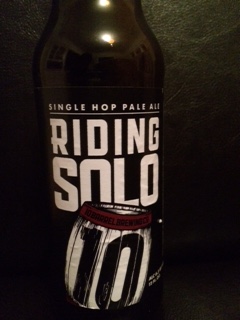
I wasn’t a beer writer then. I was an aspiring one. I wasn’t drinking much in the way of bourbon-aged strong ales back then. But that’s OK because Firestone Walker wasn’t making them yet. Part of my notes-to-self was about the impending release of “Firestone Ten.” XX will be released later this year. So bear in mind—Firestone pun intended—that they brewery was working solidly in the pale ale realm still. No wild ales like SLOambic. No Wookey Jack Black Rye IPA. Not even Union Jack. That’s right. They hadn’t even unleashed their now-flagship IPA brand. Today, they’re still all about their Burton Union, er, Firestone Union method of fermentation that’s prime for making British-style pale ales that co-founder and Adam’s brother-in-law David Walker still prefers. (In a phone interview with David this past April he said of Double Barrel Ale, a British Pale, “I drink DBA every opportunity I can. It’s my favorite style.”)
As I sat there listening to the track, it was telling that Adam, when talking about not aging but fermenting beer in wood, told me that any brewer worth his salt would know better than to do that. Or at least challenge that, which is what Matt Brynildson did when he joined the brewery. Tangent: I’d also interviewed Matt in October of 2005. He discussed having brewed for SLO Brewing where he didn’t like having to make their Blueberry Ale not because it was fruity but because it wasn’t made with real fruit, just flavor additive. I attended UC Santa Barbara nearby—graduating months before Firestone Walker launched—and recall drinking and, dare I say, enjoying said Blueberry Ale (as a 21-year-old whose friends only drank beer that came in $35 kegs or 36-can suitcases). Matt also said back then that Oak is a flavor so it’s really beer’s “fifth ingredient.”
Back to the track. Adam likened their method of brewing to “being in the bassoon business.” I’m paraphrasing: “Not everyone plays bassoon, but if that’s what you do, and it’s a wonderful instrument, you really gotta throw yourself into making a good bassoon.” I loved that analogy. (And lemme tell you something. Those double-reeded woodwinds can run up to 30 grand, but you’re not getting out for under five thou because you’re not some podunk oboe player amirite?) What Adam meant—and the sentiment was echoed during my in-person interviews with David and Matt, too—is that Firestone Walker doesn’t make beer for everyone. Anyone can play the kazoo. They make the bassoons of beer. Elegant. Rich. Unique.
According to my dictated notes, Adam went onto say, “You don’t have to be all things to all people.” He divulged that, despite it being the era where Hefeweizens and Witbiers were the big deal in microbrewing (imagine if brewers today were trying to out-wheat each other or tout being the first to use an experimental varietal of grain), he was no fan of wheat. Nor of hemp seeds, which, if you know their history with Humboldt Brewing and Red Nectar Ales, is pretty funny. First met Adam behind the table while pouring at the 2005 GABF.
Beside the bassoon line, I had a compulsory discussion with Adam about his kid brother, Andrew, who’d been the star of an early season of The Bachelor. Yikes! But Adam had a really interesting take. “Just like the 70’s had 8-tracks and the 50’s had hula hoops, we have reality TV shows and those won’t be around in future generations, either. Like TV, previous generations were concerned with who shot J.R.? This generation is concerned with who’s the bachelor going to pick?” He added that the show brought great marketing might to the Firestone Winery. Less to the Firestone Walker Brewery. He also used the word fungible two or three times. Yeah, he dropped it during the course of conversation. I hardly read or hear that word, but when I do, I can’t help but think of Adam.
So that’s it. It’s crazy to think about what has transpired in the decade since, with me, with the beer industry and scene in general, and with this brewery in particular. Firestone Walker has amassed 47 GABF medals since 2002 and hasn’t had a single dry year. David really does all the publicity and public engagements. He’s simply very affable and charming. Of course he is; he’s British. But as Adam copped to me back in 2005, the two of them got along well, which Adam said is a testament to David’s character since he’s aware that he himself is not the easiest person to get along with. “Strong opinions.” So when his brother-in-law began prattling off about starting a “microbrewery,” Adam fortuitously said, “Yep, let’s do this.”
Below is the excerpt from Red, White, & Brew about Firestone Walking Brewing. At the time, they were the one brewery I intended to make a full chapter in the book but did not. The goal was to get the deep, inside story not of every brewery in America, but 1%. That’s why there are 14 chapters in the book. There were 1,400 breweries. I didn’t think there’d be 1,500 by the time the book came out, which, in 2008 had actually climbed to 1,574. If I were to write Red, White, & Brew today using that same approach, I’d have to write 44 chapters! Anyway, it’s not my best writing, but it was my humble start. Check out the part where we learn before Firestone made sessionable pale ales, a Firestone made non-alcoholic beer (from 1986-1990)! And as a bonus, I’ll start with a line not pertaining to Firestone Walker but that leg of my roadtrip around America’s breweries:
…In the Palm Desert it is the Sonny Bono Memorial Highway, in memoriam to the former mayor of Palm Springs who couldn’t ski the forest for the trees…
Months after I graduated from the University of California at Santa Barbara in 1996, a new brewery opened up nearby. It belonged to two brothers-in-law, Adam Firestone and David Walker, hence the name Firestone Walker Brewing. The Firestone name, of course, is well known, as tire magnate Harvey S. Firestone was a rubber baron. Harvey’s grandson, Brooks, used his inheritance to start the first estate winery in Central California. In turn, his son, Adam, while already president of the Firestone Vineyard, partnered with David. They have Adam’s sister, and David’s wife, Polly Firestone-Walker, to thank for bringing them together.
I didn’t discover Firestone Walker beer until I went to Denver. At the GABF’s Pacific Region section of the festival, I met Adam, tall and youthful, pouring his beers from behind his table. He told me about his dad’s side venture making, of all things, non-alcoholic beer in the late eighties. While serving as a Marine overseas, Adam pleaded with his dad not to fold the operation. But when brands like Miller Sharps and Coors Cutter were introduced, Brooks pulled the plug.
Soon thereafter, Adam returned, having done a tour in the first Persian Gulf War. After taking over Firestone Estates, he lit out on a scavenger hunt to track down old brewing equipment for his side project. Because it proved to be a success, now he’s got shiny new equipment. If only his kid brother Andrew had revealed as much about the brewery in “The Bachelor” reality series as he did about the winery and his own personal dalliances, the brand might have a broader reputation.
The vineyard, the brewery, and a new brewpub are spread across the Santa Ynez Valley along the Central California coast, 90 miles apart. The latter, the Taproom, is in Buellton, most famous for its split-pea soup—I kid you not. The pub is located near the tree that Thomas Haden Church crashed Paul Giamatti’s Saab into in the movie Sideways. Instead of chasing down wine, my destination was beer. Looping around the off ramp that circles the tree, I made my way off the 101 and into the Taproom.
I met David, a tall British bloke gracious enough to plunk down in a booth with me and discuss their initial, and failed, idea to make beer in the winery’s spent Chardonnay barrels. Instead, the brewery patented a method of fermenting beer in charred oak barrels. Aging beer in barrels isn’t that uncommon, but these guys are the only ones in America who use them in the fermentation process. Every brewery that uses stainless steel thinks these guys are crazy. But after you taste their Double-Barrel Ale, you’ll be a convert, too.
David slipped behind the bar and pulled me a few tastes including an unfiltered version of Double Barrel. I’m not much for discussing noses, legs, or bouquets, but this beer boasted some serious oakiness. My hat’s off to brewmaster Matt Brynildson, who earned Mid-Size Brewer of the Year honors at last year’s GABF.


 ewing
ewing
 People just love to experience the weird. For this installment of All About Beer’s Beer Traveler column, we

 Among my myriad New Year’s Resolutions for 2016 is to do more beer reviews. Between the samples I happily receive on my doorstep, beer travels that find me at different breweries across strange, new lands and just happening upon a new offering at some local watering hole, I want to ensure I’m paying good attention to what I’m drinking.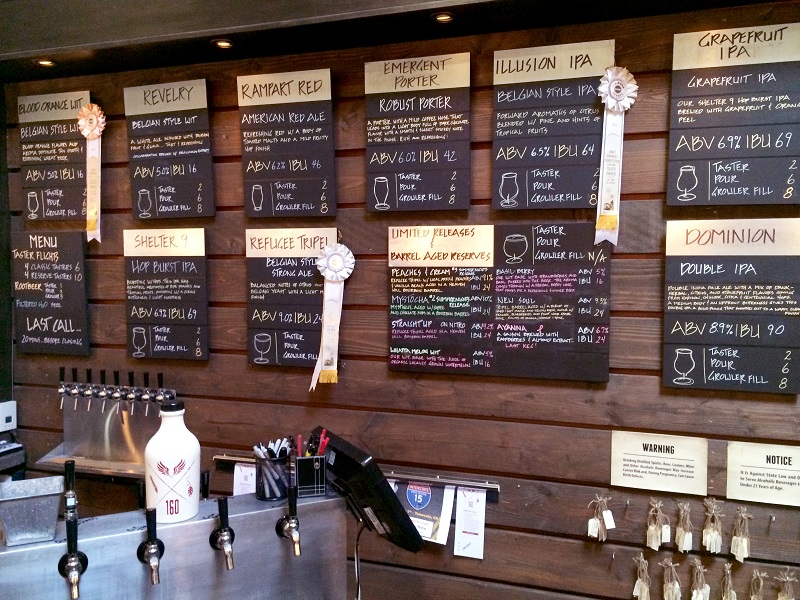
 Brian Yaeger: Beer Writer